One of the things that I have found most difficult since the beginning of the project has been finding adequate protein sources to replace nuts and cheese, two foods that were common in my diet before. Thankfully, pulses can be used as replacements in many ways so that is the focus of my update this week!
Why replace nuts and cheese?
Cheese requires a large amount of cow’s milk to produce; the ratio of milk needed to produce the same amount of cheese, measured according to weight, is approximately 10:1. This results in a very large water footprint as milk already uses 940 liter/kg, so once processed into cheese the water footprint is a huge 5060 liter/kilogram (Mekonnen and Hoekstra, 2010).
Similarly, nuts are huge consumers of water, with an average footprint of 3970 liter/kg (Mekonnen and Hoekstra, 2010). Commercial almond and walnut farming in particular has been the subject of much criticisism for its contribution to the California drought and the deleption of groundwater in the area (The New York Times, 2015).
(Image source: pulses.org)
Why are pulses a better source of protein?
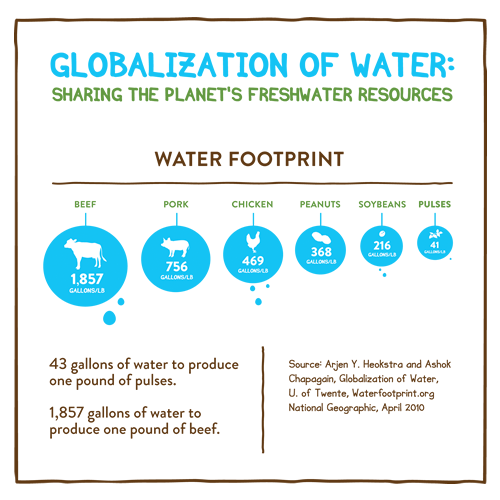
Pulses are one of the most water efficient sources of protein, requiring only 19 liters per gram of protein. This is a fraction of that required by many other protein rich foods: nuts, for example, require on average 139 liters per gram of protein (Mekonnen and Hoekstra, 2010). Additionally, legume crops are very sustainable in that they are biological nitrogen fixers (Hossain, 2016) which enrich soil quality, decreasing the need for inputs such as nitrogen-rich fertilizer.
How can I use pulses to replace nuts and cheese?
Supplementing your diet with pulses becomes easier once you gain familiarity with them. I’ve been using them to replace meat since I transitioned to vegetarian 6 years ago and a large part of learning how to substitute comes from experimentation! A great resource for those starting out is the visual guide to pulses from pulses.org.
One of my go-to pulse-based foods is hummus, which can be used as a substitute for cream cheese on crackers, sandwiches and savoury bagels. All you need to make hummus is a blender, a can of chickpeas, some tahini (sesame paste), lime or lemon juice, and some spices. There is a wealth of hummus recipes online with every flavour combination imaginable, so I encourage you to go forth and experiment! My personal favourite incorporates roasted red peppers, but I made a batch of chipotle and lime hummus earlier this week and it is quite delicious.
Oatmeal is a comforting and warming breakfast, especially for the chilly mornings we are getting now that it is mid-October. I used to bulk out my oatmeal with fruit and almonds, but a great protein-rich alternative is this red lentil power porridge (omit the almond butter topping).
When I am short on time one of my go-to weeknight meals is pasta with lentils. This is more of a meat replacement than anything else, but I find that sauce with lentils in it is filling and flavourful enough to be enjoyed on its own without being covered in parmesan. On those days when I get home late and super hungry I often sautee some vegetables in a pot, throw in a can of drained lentils and a jar of marinara, and combine it with whatever pasta I have on hand. It makes great leftovers as well!
Citations:

 Reducing Our Food's Water Footprint